Bringing the idea to life
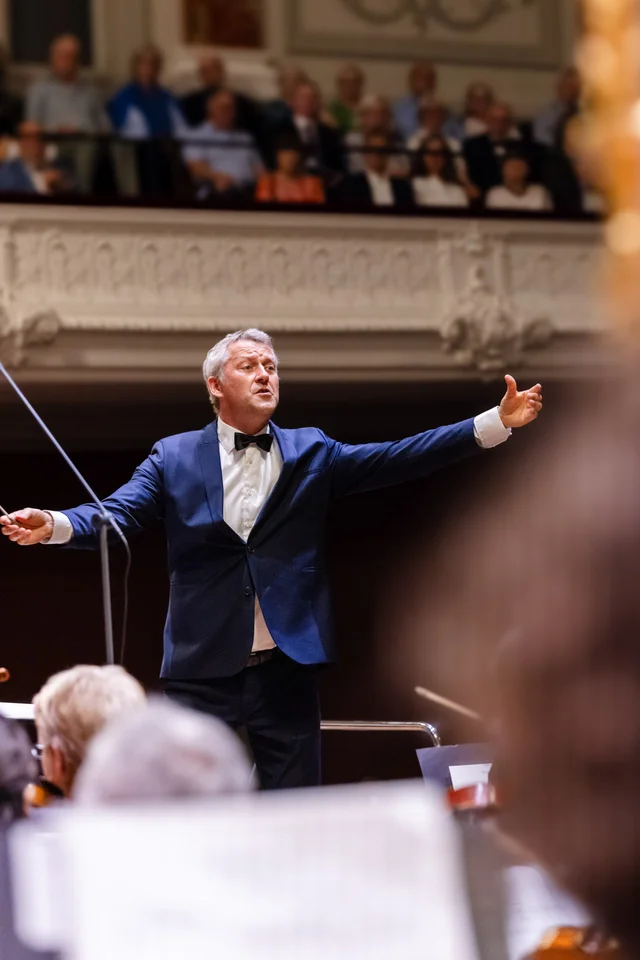
Benjamin Herzog: Gustav Mahler once said that his music was ‘lived, not made’. To what extent is this true of him in particular, as opposed to – say – Anton Bruckner?
Markus Poschner: Ultimately, Mahler is always describing himself through his music. He looks outwards, at the world around him, but always through his own lens – with all his doubts, contradictions, hopes and fears. That is why his music strikes us as so immediate today. Bruckner’s gaze, on the other hand, tends to look upwards – into infinity – and downwards, deep into the realm of longing, but not so much inwards. For him, it is about the metaphysical, about vision and mystery. Mahler recounts earthly life; Bruckner seeks to escape it.
BH: As a conductor, you engage intensively with Romantic and Late Romantic symphonic music; you enjoy conducting cycles, most recently Bruckner’s symphonies. In Basel, the Mahler cycle has now entered its second year. What is the overarching narrative for the planned five years?
MP: For us, the cycle is a great shared journey of discovery, a chance to take stock. Over five years, we’re experiencing ourselves as a symphony orchestra; we’re connecting with our own history and tradition, and reinventing the world a little bit with every Mahler symphony. In doing so, we’re constantly shifting our perspective, from the Romantic narrator to the radical modernist. It’s actually like a streaming series – only with much better sound and, in fact, about real life.
BH: According to Mahler, there is always ‘the mysterious, the incommensurable’ at work in a work of art. Once it has been ‘taken in at a glance’, the work loses its magic. Yet there are fascinating interactions between mystery and reason. Where do you stand on this with your interpretative approach?
MP: It is precisely this tension that interests me. Analysis is important; it provides guidance. But once everything has been explained, it becomes boring and meaningless. Music must always retain something that eludes our grasp. We live in an age where we believe we can measure and calculate everything. Mahler reminds us that the most important things are often precisely those that cannot be quantified and cannot be grasped by the intellect.
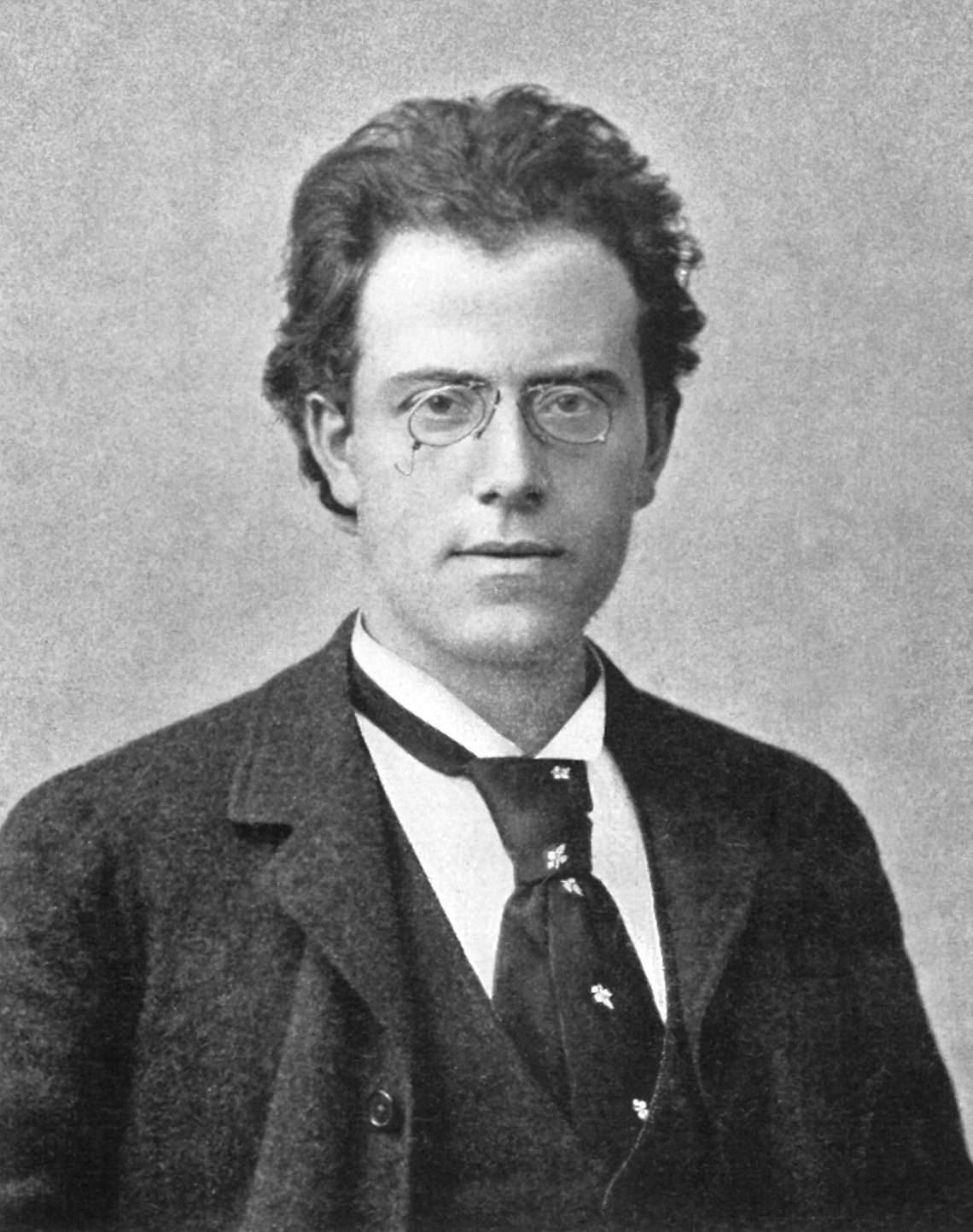
BH: Mahler began writing his 5th Symphony in 1901 whilst on summer holiday in Maiernigg on Lake Wörthersee. Swimming, sunbathing, going for walks. And then, despite all the “disturbing hammering in the house”, as Mahler’s close friend Nathalie Bauer-Lechner recalls in her memoirs, Mahler plunged “headlong into composing”. How do you imagine such a beginning; what do we know about it?
MP: Mahler was a workaholic and, at the same time, a bon vivant. I imagine that the ideas had been brewing inside him for a long time. Then he sits by Lake Wörthersee, gazes out at the water – and suddenly a floodgate opens. For him, composing was probably less about inventing than about unleashing something that had long been there.
BH: The Scherzo of his Fifth, according to Mahler, depicts man ‘in the full splendour of the day, at the highest point of his life’. Yet the symphony doesn’t exactly sound like a hymn to optimism. What does it represent for you?
MP: For me, the Fifth tells of life in all its ambivalence. The Scherzo may be set in bright daylight, but even there shadows remain visible. Mahler is sceptical of any simplistic assertion of happiness. May that be what makes him so modern today. We are all familiar with this coexistence of success and uncertainty, of euphoria and crisis mode. And precisely this eternal doubt.
BH: Theodor W. Adorno once said of Mahler that each of his symphonies ‘erases’ the one that came before it. What new territory do we enter with the Fifth compared to the previous ones, the so-called Wunderhorn symphonies
MP: With the Fifth, Mahler begins a new chapter. The world of the Wunderhorn, with its songs, fairy-tale characters and images of nature, recedes into the background. The music becomes more abstract, more psychological and more radical. He removes the training wheels, as it were. From now on, the symphony speaks for itself – and sometimes against itself.
‘With every Mahler symphony, we reinvent the world a little bit.’
Markus PoschnerBH: Let’s return to the present day. Mahler’s symphonies are currently enjoying an unprecedented boom. In an era that is complex, full of ruptures and contradictions – just like Mahler’s music itself. And yet, in a symphony, everything comes together as a whole in the end. Is Mahler’s music – also – music of certainty?
MP: I don’t believe that Mahler’s music is music of certainty. Rather, it is music of ceaseless searching. But that is precisely where its power lies today. It does not gloss over the fractures, but integrates them. In the end, the message is not ‘Everything will be all right’, but may be the far more important one: ‘Despite everything, life goes on.’ That is probably the more credible form of hope for our times.