Where myth and landscape merge
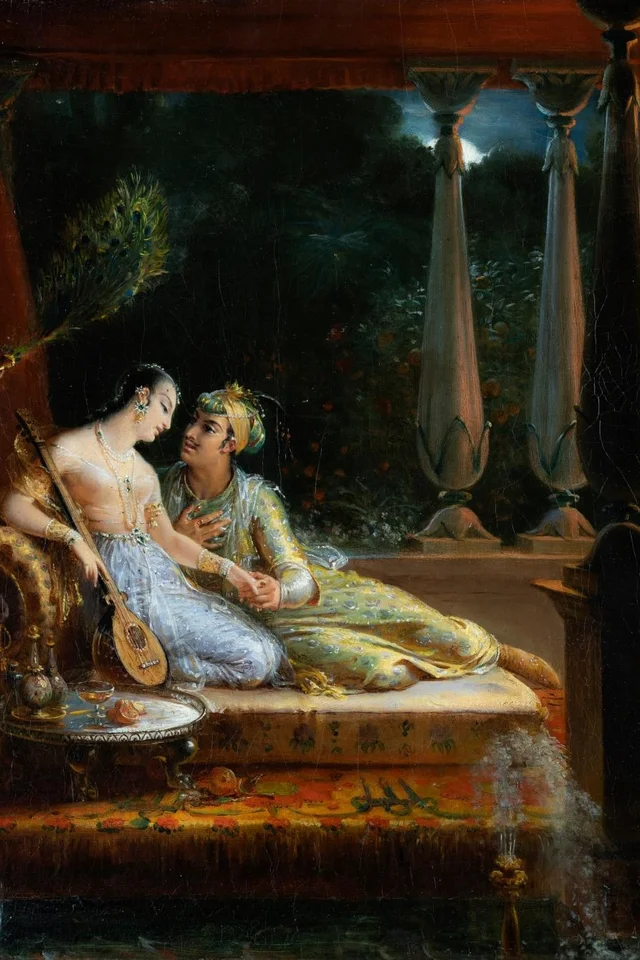
If men are said to have a certain tendency towards jealousy, then the Sultan Shahryar sits at the sorry far end of the scale. According to legend, he was so pathologically distrustful of women that he had each new bride put to death the morning after the wedding night, so as to rule out any chance of infidelity. But one of his brides, Scheherazade, knew that men’s curiosity is even greater than their jealousy. So she told him stories so gripping, vivid and extravagant that the Sultan put off the killing and demanded more instalments night after night. And so, after 1001 nights, Scheherazade was still very much alive, humanity was richer by a great many tales from the Orient, and the world of music had gained an orchestral work that glows like a fairy tale and tells its stories with a richness of imagery few others can match.
The symphonic suite Scheherazade, based on the Arabian Nights, is the masterpiece of the Russian composer Nikolai Rimsky-Korsakov, who had himself sailed round the globe as a naval cadet in the 1860s, broadening his horizons in the most literal sense. Yet even more useful to him than any real-life view beyond his own back yard was his mastery of orchestration: Rimsky-Korsakov’s score can serve as a benchmark for how rich and varied a large late-Romantic orchestra can sound. Lavish colours, melodic arabesques, the mystery of storytelling: Rimsky-Korsakov created a world that paints the illusions of the Orient in the most vivid detail. And yet, how could it be otherwise, it remains thoroughly Western.
Did the naval cadet Rimsky-Korsakov also cruise off the north-west coast of Scotland? His fellow composer Felix Mendelssohn did, in 1829, and the Hebrides made a powerful impression on him. His ship may not have been dashed against the rocks like Sinbad’s in one of the Arabian Nights tales, but the rough sea probably took quite a toll on the young city dweller. On board, he sketched in a letter a melodic line that was later entrusted to the bassoons in the finished concert overture The Hebrides. Much like the Scheherazade suite, this overture is music that opens up a realm of legend where myth and landscape merge. And mystical they are, these islands with the famous Fingal’s Cave on Staffa, said in Irish-Celtic tradition to have been created by the giant Fionn mac Cumhaill. Mendelssohn’s music for it: a fairy tale of nature, shifting between grandeur and melancholy, with the sea as storyteller.
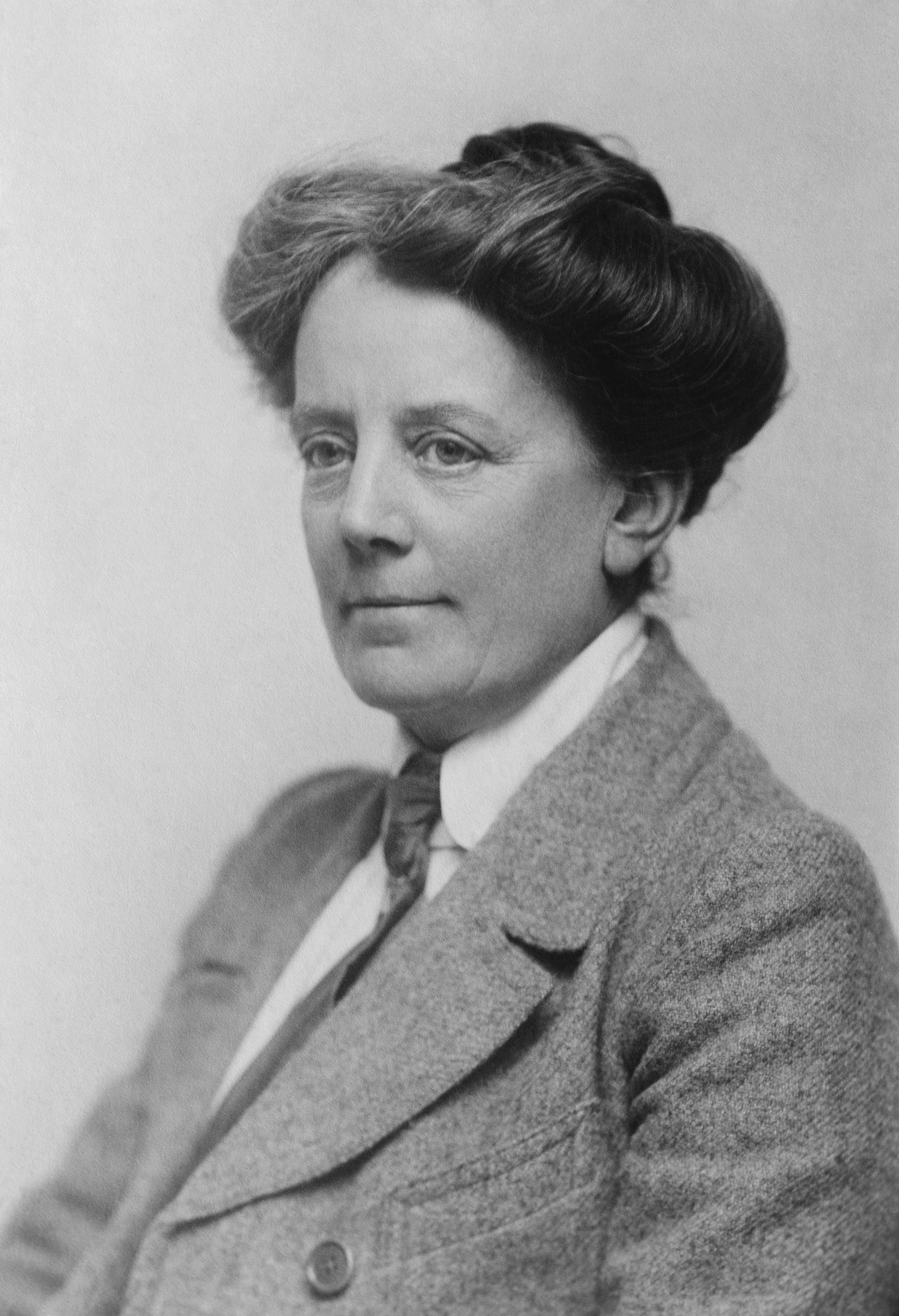
Scheherazade’s kindred spirit was Ethel Smyth, a tough woman who knew how to stand up to male power and arrogance with an extra dose of chutzpah. Composer, author, leading figure of the British women’s movement in the early 20th century. She herself wrote that she was known far and wide because she was ‘a militant suffragette who seized the chance to conduct The March of the Women from my cell in Holloway Prison with a toothbrush’. And likewise ‘because I conducted my own operas and love sheepdogs’ and ‘because I always dressed in tweed and sometimes, at winter afternoon concerts, even conducted in tweed’.
Exactly 98 years ago (so a good deal more than 1001 nights), Ethel Smyth’s Concerto for Violin, Horn and Orchestra received its premiere: a work that seems to come from a distant age, even measured against the year 1928. This is thoroughly late-Romantic music, revelling in warm colours and lyrical arcs and recalling Brahms or, faintly, Mahler. And if you ask the fundamentally pointless question of whether this is music of a female or a male kind, you will get no answer whatsoever. The question alone would have made Ethel Smyth rebel, and rightly so, for she wrote: ‘The whole attitude of the English towards women in the field of the arts is silly and uncivilised. In art there is no sex. How you play the violin, how you paint or compose, is what counts.’
Author: Stefan Schickhaus