“It’s all about the groove!”
“You have to feel George Gershwin’s music,” says conductor, pianist and organist Wayne Marshall. He should know: Gershwin’s work has been a constant thread running through his musical career. A conversation about unique soundscapes, an extraordinary love story and the relevance of 'Porgy and Bess' in the 21st century.
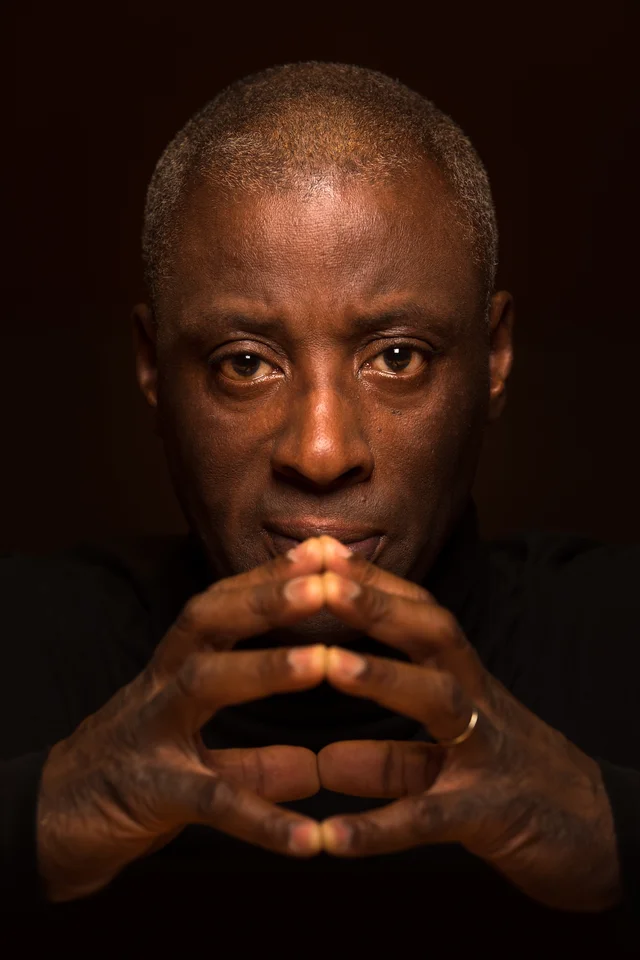
Elisabeth von Kalnein: You have been working with George Gershwin’s music for decades. Do you still discover new things in it?
Wayne Marshall: Definitely! I’m still discovering pieces of his that I didn’t know before. The most important thing with Gershwin is: you have to feel his music. It’s not about what’s written in the score. That’s what I want to convey to the orchestras I work with.
EK: Under your baton, symphony orchestras seem to transform into jazz bands. How do you manage that?
WM: Jazz is largely improvised. Gershwin, on the other hand, had to write his music down, but in doing so he had to make compromises so that it looked ‘right’ on paper. I encourage the musicians not to stick so strictly to the notes and, for example, to alter note lengths. The crucial thing is the groove!
EK: Do you remember your first encounter with Gershwin’s music?
WM: Yes. I was eight years old and heard his piano concerto on the radio. And – my goodness – that was a life-changing experience! I’d never heard music like that before. I was desperate to get hold of the score, even though I couldn’t read music yet. A little later, I somehow managed to learn the concerto. I tried to imitate the recording I’d heard on the radio.
EK: Beyond Gershwin, you’re also known for your interpretations of 20th-century American works. Why does this music suit you so well?
WM: Because of the jazzy element. It’s very much present in George Gershwin and Leonard Bernstein, but also in Aaron Copland and Cole Porter. They created unique soundscapes. Alongside jazz, they incorporated elements of the musical. This sound is familiar to me: I grew up with the music of Hollywood musicals. I draw on this sound, the style of playing and that special ‘feeling’.
EK: Gershwin’s opera has been a part of your life for a long time. As far back as 1986, you appeared in a production of Porgy and Bess at Glyndebourne. What memories do you have of that?
WM: It changed my life. My sister auditioned for the opera chorus back then, and I accompanied her on the piano. Simon Rattle heard me playing and subsequently engaged me not only for a role on stage, but also as a répétiteur. It was my first encounter with the world of opera. I actually wanted to become a church organist and hadn’t thought about conducting. This opera opened up entirely new musical paths for me.
“I’m Wayne, that’s it.”
Wayne Marshall, conductorEK: You are staging your own concert version of Porgy and Bess in Basel.
WM: I’ve focused on the main characters and pieced together the best musical moments in such a way that the narrative arc is preserved.
EK: How do you view the love story between Porgy and Bess?
WM: It’s a story of life: two people meet under the most unlikely circumstances, they fall in love, go through crises and tragedies … I find the open ending particularly interesting: Bess relapses into drug use and goes to New York. Porgy sets off – despite his poverty and his disability – to find her. How might the story continue? What does Porgy experience in New York? Does he find Bess?
EK: Porgy and Bess is set in a milieu marked by violence and poverty. The characters are African Americans. Gershwin cast black singers in the premiere. Very unusual at the time.
WM: It reflects Gershwin’s view of this community. He travelled to South Carolina himself, the setting of the opera, to draw inspiration from the people and their culture – and from their music: that mix of jazz, gospel and rap, that distinctive sound of Black singers. Gershwin succeeded in capturing that.
EK: Gershwin stipulated that Porgy and Bess should only be performed on stage with Black singers. In your concert version, too, you cast the solo roles with People of Colour.
WM: Yes, that’s important to me; it’s simply part of it. To bring the music to life, you need a certain way of singing. And Black singers, above all, have mastered that. I don’t think too much about the political dimension. For me, it’s about the composer’s intention and getting the sound right. My parents instilled in me the feeling that I’m just like everyone else. I don’t see myself as black or white – I’m Wayne, that’s it. We’re all equal on this planet.