Facets of Passion
With music by Pyotr Ilyich Tchaikovsky, Josef Suk and Ottorino Respighi, the concert ‘Leidenschaftlich’ brings together a range of emotional intensities. These are harrowing in Tchaikovsky’s ‘Symphony Pathétique’, and hidden yet no less powerful in the two works for violin and orchestra by Suk and Respighi.
‘Passion’: an emotion that completely seizes the mind, thought, feeling and will. So says the dictionary. A stronger term would be ‘fervour’, but that has completely fallen out of fashion. You can’t very well ask an artist like Julia Fischer: ‘Ms Fischer, are you a fervent person?’ The question about passion was admittedly a bit awkward, but never mind, let’s give it a go. And Julia Fischer took it in her stride and replied: “I think every musician has to be passionate. In an emotional sense, but also in their approach, their work, their dedication to the profession.”
‘Passionate’ – this is the keyword used to describe the concert programme of the Sinfonieorchester Basel, in which the violinist Julia Fischer will present two works for which the word ‘present’ is truly still appropriate. Fischer is known for not always playing just the standard violin concertos, but also for venturing beyond the mainstream. Although she doesn’t think in such categories: “In my opinion, it is an artist’s duty to play works that they understand and are convinced of.”
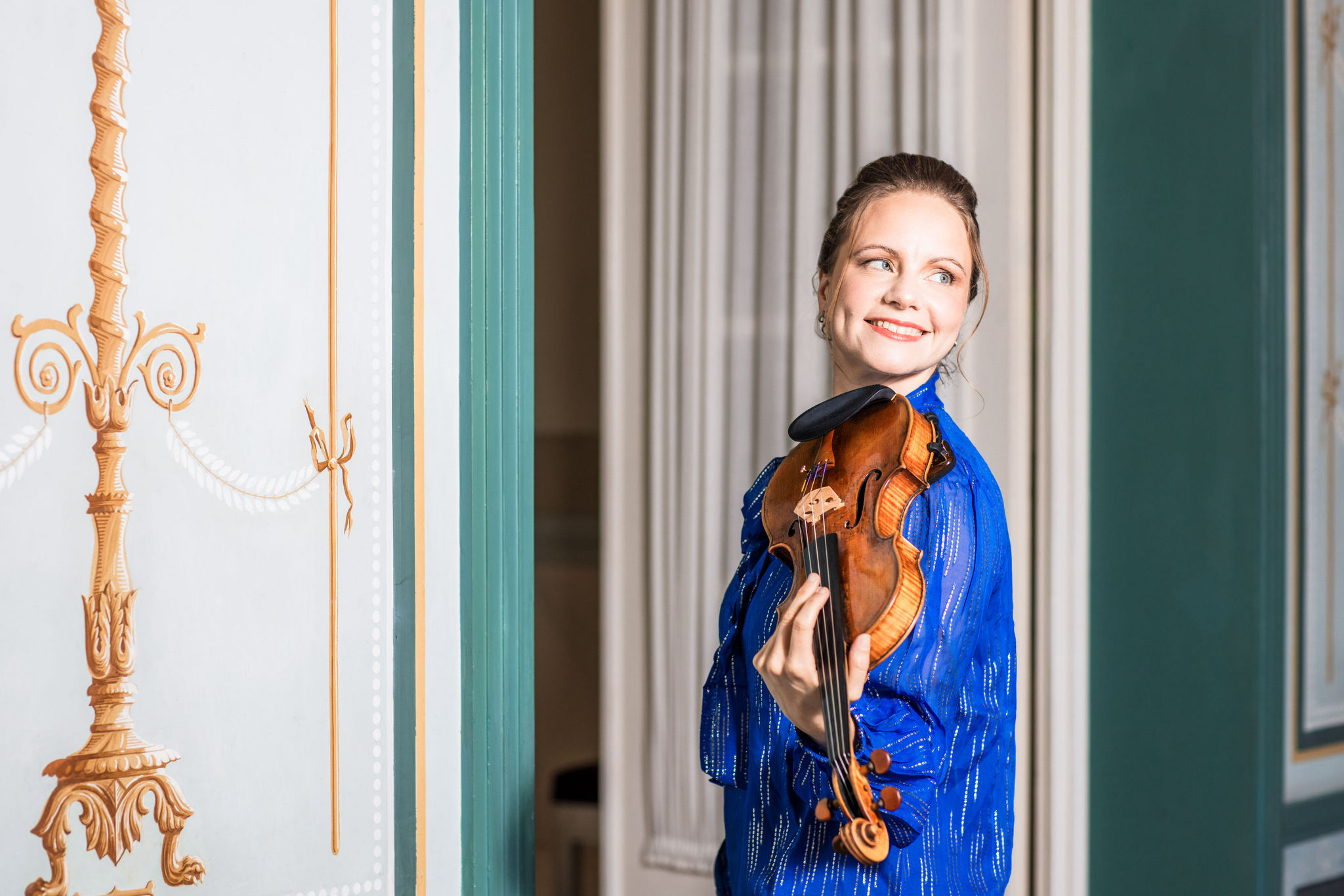
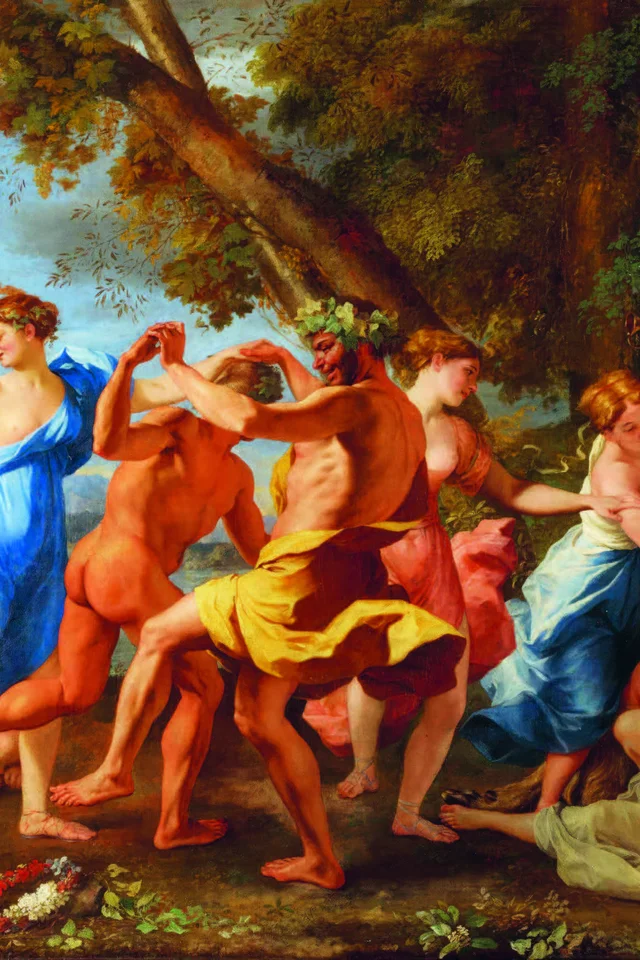
“That must be me!” was Julia Fischer’s reaction when she was played violin works for the ‘Blind Listening’ section of the music magazine Concerti, with a request to evaluate them. Indeed, when it comes to Ottorino Respighi’s Poema autunnale, there simply aren’t many alternatives to her own CD recording from 2011. Respighi’s ‘Autumn Poem’ is melancholic music without any particularly ‘ardent’ tone. The composer, who a hundred years ago ventured into a world of fauns, bacchantes and the flute-playing Pan, reveals his lyrical side here – yet he also becomes passionate, plunging the violin into the stamping Dionysian festival, thus briefly bringing fire to the otherwise tranquil scene. ‘It was the conductor Giuseppe Sinopoli who drew my attention to Respighi’s violin works,’ explains Julia Fischer. ‘I was immediately captivated by his music. I consider him an underrated composer who is performed far too rarely.’
The same CD also features Josef Suk’s Fantasy for Violin and Orchestra, recorded by Julia Fischer, which is likewise pastoral music with a deeply lyrical quality. The composer, incidentally the son-in-law of Antonín Dvořák, said of his piece that it was “as if a young Czech girl were singing a simple and touching tune somewhere at the edge of the forest – the song of our forests, fields and meadows.”
For most people, Suk’s Fantasy is a work of rare interest, but not for Julia Fischer. “I first heard Josef Suk’s Fantasy when I was just a small child: as my mother comes from the former Czechoslovakia and studied in Prague, the great Czech composers – Dvořák, Smetana, Suk, Janáček – were constantly playing in our home. I had a CD by the violinist (and Suk’s grandson) Josef Suk, on which he played Dvořák’s Violin Concerto and his grandfather’s Fantasy. I was immediately captivated by both works and thought, quite honestly, that they belong in every violinist’s core repertoire.”
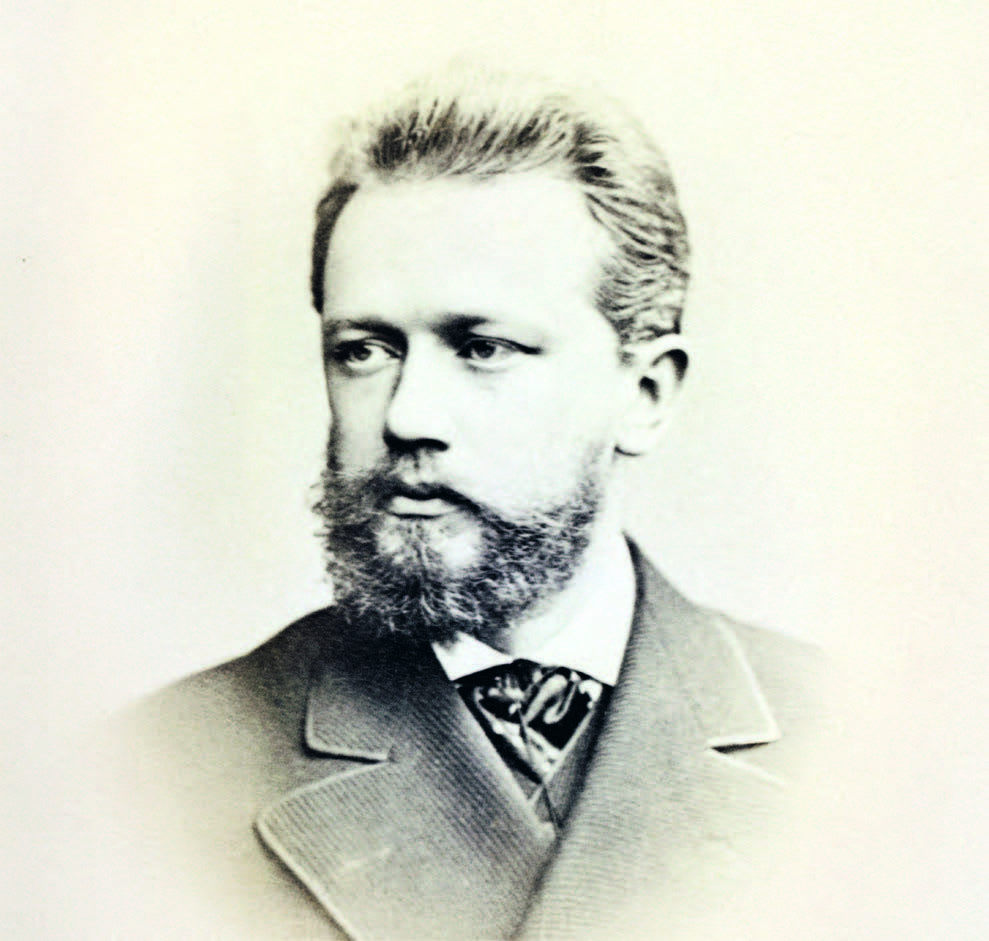
Two lesser-known works, one all the more familiar: in this concert, Respighi and Suk are joined by Pyotr Ilyich Tchaikovsky with his final symphony, the Symphonie Pathétique. A work brimming with passion? Absolutely! Furious in the third movement, the penultimate one, after which – as experience shows – the applause breaks out; one can scarcely resist this magnetic final effect. But then comes the all the more lingering Lamentoso. A finale unlike any symphony has ever ended, certainly not in Tchaikovsky’s case: quiet, fading away, resigned. Tchaikovsky’s Pathétique is a symphony that ‘creates suffering’, for the composer confessed that he ‘often wept bitterly whilst composing in his thoughts’. He died nine days after the world premiere, which he conducted himself, presumably of cholera. The theory that he was forced to take his own life by a court of honour because of his homosexuality would certainly fit nicely with the image of the Pathétique as Tchaikovsky’s own requiem, but it must be regarded as disproved.
Author: Stefan Schickhaus