Between Heaven, Earth and the Abyss
Height, width, depth: the second subscription concert, ‘Sehnsucht’ (Longing), unfolds soundscapes across three dimensions. Kaija Saariaho’s ‘Ciel d’hiver’ transports us to the tranquillity of a winter starlit sky, whilst George Crumb’s ‘A Haunted Landscape’ takes us to places steeped in memory. Robert Schumann’s Piano Concerto, featuring Jan Lisiecki, opens our eyes to the inner world, to a landscape of the soul – whilst Maurice Ravel’s ‘La Valse’ plunges old Vienna into a frenzy of death. Author Stefan Schickhaus follows this path between heaven, earth and the abyss.
Height, width, depth: three-dimensional soundscapes form the basis of the orchestral concert featuring pianist Jan Lisiecki.
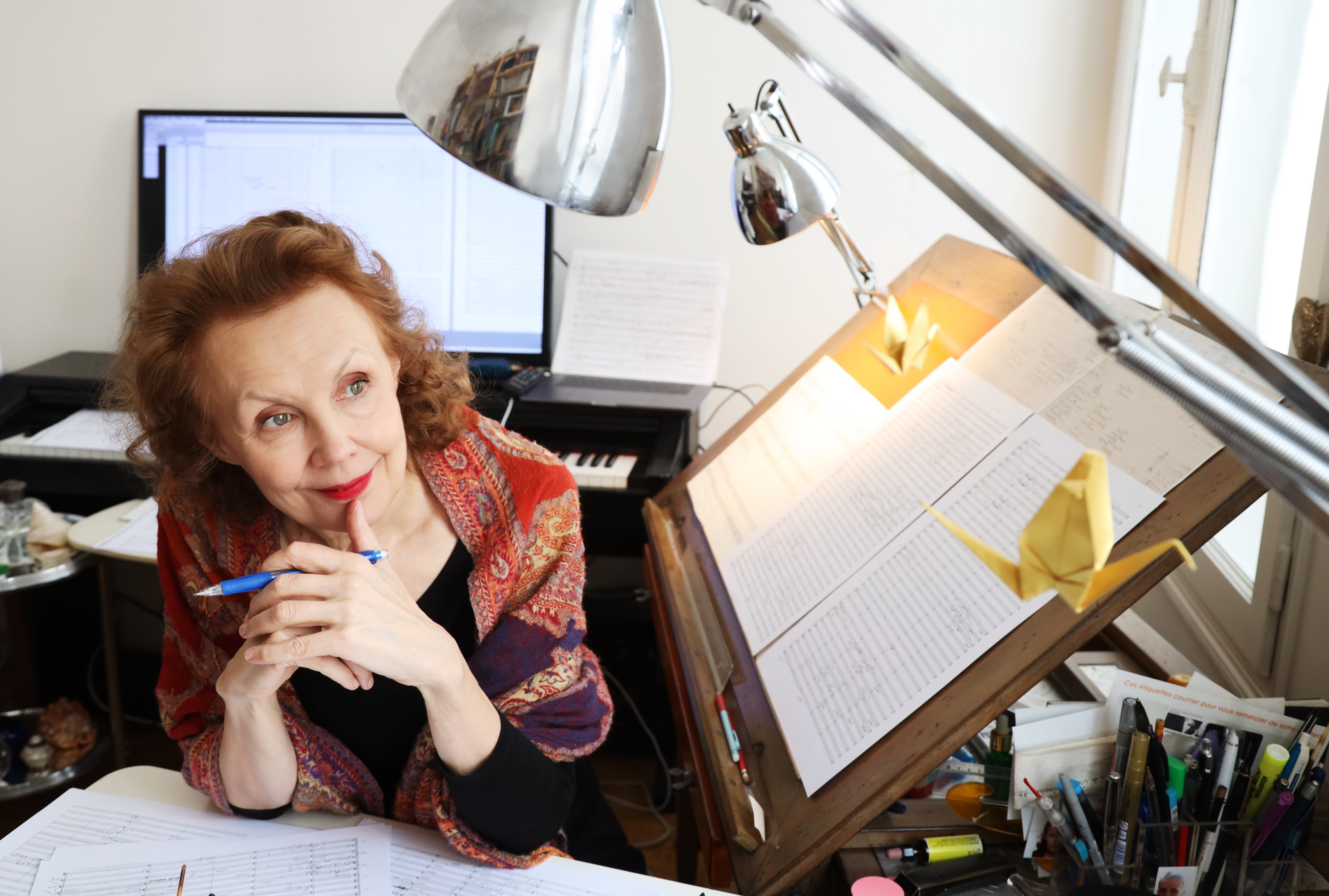
According to myth, Orion considered himself the greatest hunter in the world. That is probably how it was, for one does not end up as a constellation in the firmament without good reason. The three-movement orchestral work Orion, which the Finnish composer Kaija Saariaho dedicated to him in 2002, is correspondingly powerful. Yet there is also this middle movement, Ciel d’hiver, which the composer later extracted from the work, reworked and made even more understated. For when gazing at the winter night sky, the myth of the triumphant hunter no longer plays a part.
“I wanted to give the same musical material a more intimate and warmer form,” she said. “The piece is inspired by the feeling of tranquillity and solitude one experiences when gazing at the winter starry sky.” Two harps, a piccolo, luminous strings – “the instrumental solos at the beginning of the piece are like portraits of individual stars of different colours and intensities. As the solos pass from the piccolo to the violin, clarinet, oboe and finally the trumpet, they gradually penetrate the soundspace and awaken the entire orchestra in a slow yet determined movement.” This winter sky sounds clear and delicately percussive, static yet animated; one is unsure whether one senses cold or, after all, warmth. A soundscape just beyond the earthly realm.
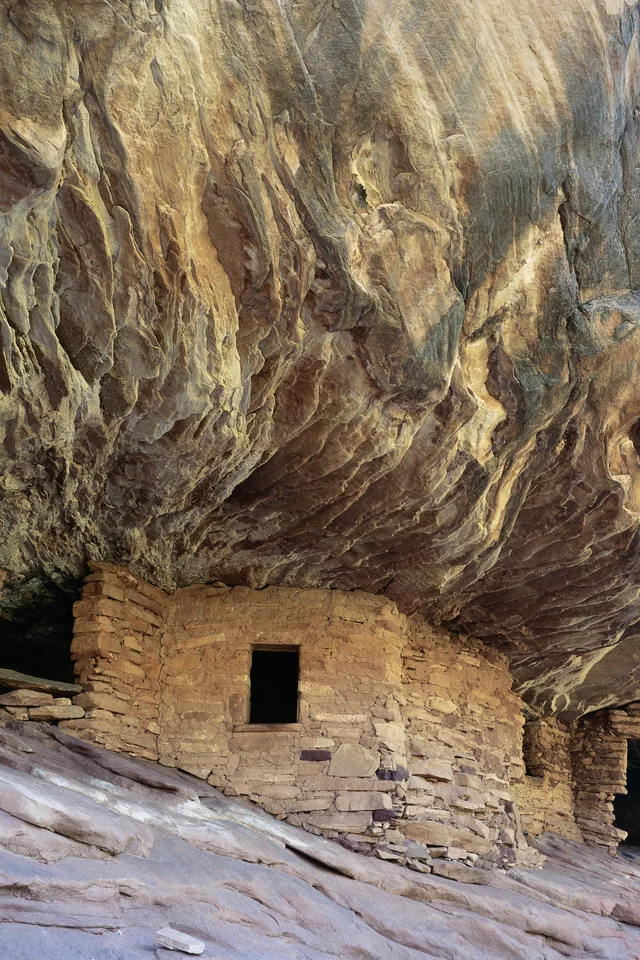
A Haunted Landscape, captured in 1984 by George Crumb, is a sonic landscape deeply rooted in the earth. The title reflects his feeling “that certain places on planet Earth are surrounded by an aura of mystery”, according to the American composer. ‘Haunted’, then, not in the trivial sense, but as a place imbued with memory, with the invisible presence of the past. Crumb is convinced that some places carry their history within them like an inaudible sound. And music, he says, is “an ideal medium for describing the minute, subtle nuances of emotions and sensations that hover between the subconscious and the conscious.”
His ‘ghostly landscape’ shifts and pulsates between celestial sounds and mysterious darkness; in the past, one would probably have referred to it as a Notturno, a piece of night music. Two solo double-bass players sustain a pedal note, the low B, which sounds at 60 hertz – for Crumb had originally associated this value with the frequency of alternating current. He assumed this was an unchanging natural constant. It was only later that he learnt that this frequency “is arbitrarily set by humans and is not even standardised internationally, let alone intergalactically!”
“Robert Schumann has succeeded in offering a glimpse into the landscape of the soul.”
Stefan Schickhaus“Nature creates its own acoustics,” Kaija Saariaho once said in a different context. This concert programme is about soundscapes, about sonic imaginings, about what resonates within us when we look up at the sky or out into the distance. Or when we look within ourselves, that is, inwards, into the depths. With his Piano Concerto, Robert Schumann succeeded in capturing just such a glimpse into a landscape of the soul – a view confirmed by the pianist Jan Lisiecki, particularly with regard to the deeply introspective middle movement. “His own spirit wrestles with itself,” is the powerful image Lisiecki conjures up. There are bipolar inner forces at work, so intricately interwoven that one can scarcely separate them.
Not a landscape, but a city – namely Vienna; not nature, but rather a society, one in constant motion. Maurice Ravel enables this view from the outside with La Valse: “Through floating veils of mist, one can briefly make out couples dancing the waltz. Gradually, the veils dissolve: one beholds a vast hall with countless people whirling in circles.” In 1920, the French composer created a piece of music, originally intended for a ballet, which became both the apotheosis of the Viennese waltz and, at the same time, its swan song. For Ravel’s ‘Waltz-Vienna’ is no longer a place of cosiness; here, the composer reflects on the upheavals of the First World War and the collapse of the old order.
La Valse begins with a correspondingly morbid and sombre tone, like a faded memory of Franz Schubert and Richard Strauss, and as the waltz draws nearer, one recognises distorted, out-of-tact grimaces instead of blissfully swaying dancing couples. It is a maelstrom, music in a frenzy; it hallucinates – after this deathly frenzy, nothing more can come. The framework has been shattered once and for all, the dance floor splintered, the senselessly overloaded chandelier crashing down upon the company.
Can nothing more come? As a ‘bonus track’ or encore, the orchestral work μ-Cephei by Basel-based composer Anna Sowa follows. μ-Cephei is a so-called red giant, a star that glows red. Astronomers will recognise the parallel here with the constellation of Orion, since Betelgeuse, which marks one of the hunter’s shoulders, is a star of the same class and colour. But anyone viewing this from a socio-political perspective is immediately reminded of Ravel and La Valse – for a mightily swollen red giant star is on the verge of collapse, just as the Habsburg Empire, symbolised by the waltz, was in its day. An end in ecstasy.